
The Principle of Self-Defense
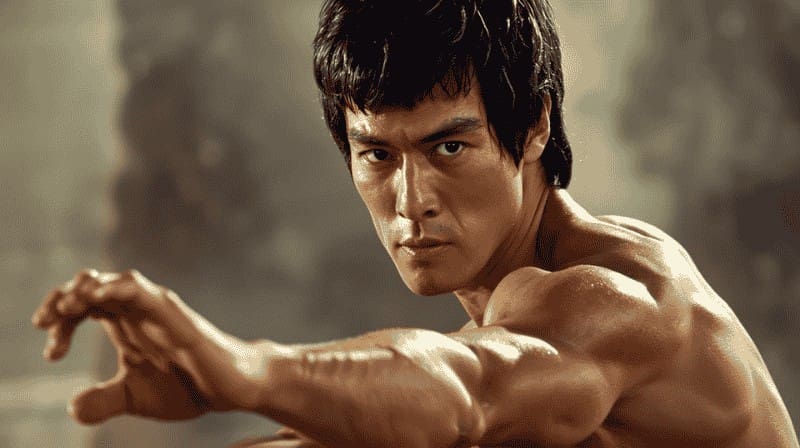
“There’s only one basic principle of self-defense: you must apply the most effective weapon, as soon as possible, to the most vulnerable target.” — Bruce Lee
Bruce Lee was not merely speaking of combat when he uttered those words — he was describing a universal law of human survival. Beneath the language of strikes and targets lies something deeper: the art of clarity under chaos, of choosing what matters most in the smallest possible window of time. Self-defense, in its truest form, is the study of efficiency — not in technique alone, but in perception, decision, and will.
Too often, self-defense is misunderstood as the pursuit of violence, when in truth it is the pursuit of control. It is not about conquering another person, but mastering oneself in the instant before the world unravels. Lee’s “most effective weapon” is not necessarily a fist, a blade, or a firearm. It is the sum of awareness, preparedness, and decisiveness — the ability to act with purpose when hesitation could cost everything.
The “most vulnerable target” is not always physical either. Sometimes it is the fragile equilibrium of a predator’s intent — the point at which confidence can be disrupted by assertiveness, by distance, by a loud command, or by the sudden realization that the would-be victim is alert, capable, and unwilling. The vulnerable point is whatever breaks the momentum of the threat.
When Bruce Lee distilled self-defense to a single principle, he was urging us to remove the clutter — the false complexity that often clouds the human response to danger. In a violent encounter, there is no time for intellectual debate or emotional turmoil. What remains is instinct refined by training, and action governed by moral clarity. The challenge is to train both the body and the mind to act with immediacy and restraint in equal measure.
Self-defense, properly understood, is not a reaction to fear but a discipline of awareness. The person who cultivates awareness — of their surroundings, of human behavior, of exits and opportunities — already wields the most powerful weapon: foresight. The ideal practitioner of self-defense rarely needs to fight because they recognize danger before it fully forms. They see the shadow of intent and step aside before it solidifies.
Philosophically, this principle aligns with an ancient truth echoed through many martial traditions: the highest form of mastery is not domination, but avoidance of unnecessary conflict. Yet when conflict becomes unavoidable, the duty shifts — from restraint to decisive action. In that crucible, Bruce Lee’s axiom becomes literal: the defender must direct their most effective means, immediately, toward the source of greatest danger. There can be no delay, no confusion. Action replaces thought; training replaces fear.
Concealed carry sits within this same frame as both a practical option and a profound ethical responsibility. For some, a firearm carried discreetly is the most effective tool available in a moment when lives are at stake; for others, it is a last-resort burden they hope never to use. Either way, carrying is not merely about possession — it is a commitment to competence, judgment, and restraint. The person who chooses to carry must cultivate awareness that far exceeds routine preparedness: they must understand when force is truly justified, how quickly a decision to use lethal force can become permanent and life-altering, and how law, morality, and consequence intersect in the aftermath. A concealed firearm does not lessen the need for avoidance, de-escalation, and escape; it amplifies the need for thoughtful, scenario-based training, legal literacy, and a temperament that prefers disengagement until all other options have failed.
The moral weight of self-defense lies in the balance between readiness and restraint. One must prepare to do harm without desiring it. To train for violence, yet live in peace. It is this paradox — this disciplined coexistence of gentleness and strength — that defines the true warrior. As Lee taught, the highest goal is not to fight well, but to live so well-prepared that fighting becomes unnecessary.
For the modern defender, this principle extends beyond technique to every layer of preparation — situational awareness, conflict de-escalation, use of tools, and understanding of law. The firearm, when present, is an extension of a person’s judgment and training; it is never a substitute for clear thought. The true weapon remains the mind — disciplined, moral, and alert.
Ultimately, Bruce Lee’s principle calls us to a kind of moral economy: to act only when necessary, to use only what works, and to end the danger as swiftly as possible. It is a philosophy of precision and compassion — compassion to oneself, and even for the humanity that is lost in the moment of violence.
To live by this principle is to live in awareness. To train not only to protect, but to understand. And to remember that in every moment of self-defense, the real struggle is not only for survival, but for the preservation of one’s integrity while facing the worst that humanity can offer.
The below links are affiliate links. We take pride in making product/service recommendations which we have vetted and use ourselves. If you make a purchase after clicking one of these links, we earn a small commission at no expense to you.